Video ad localization: a production plan for Korean, English, and Japanese versions
Plan one reusable shoot, then adapt the script, on-screen text, audio, and purchase information for each version.
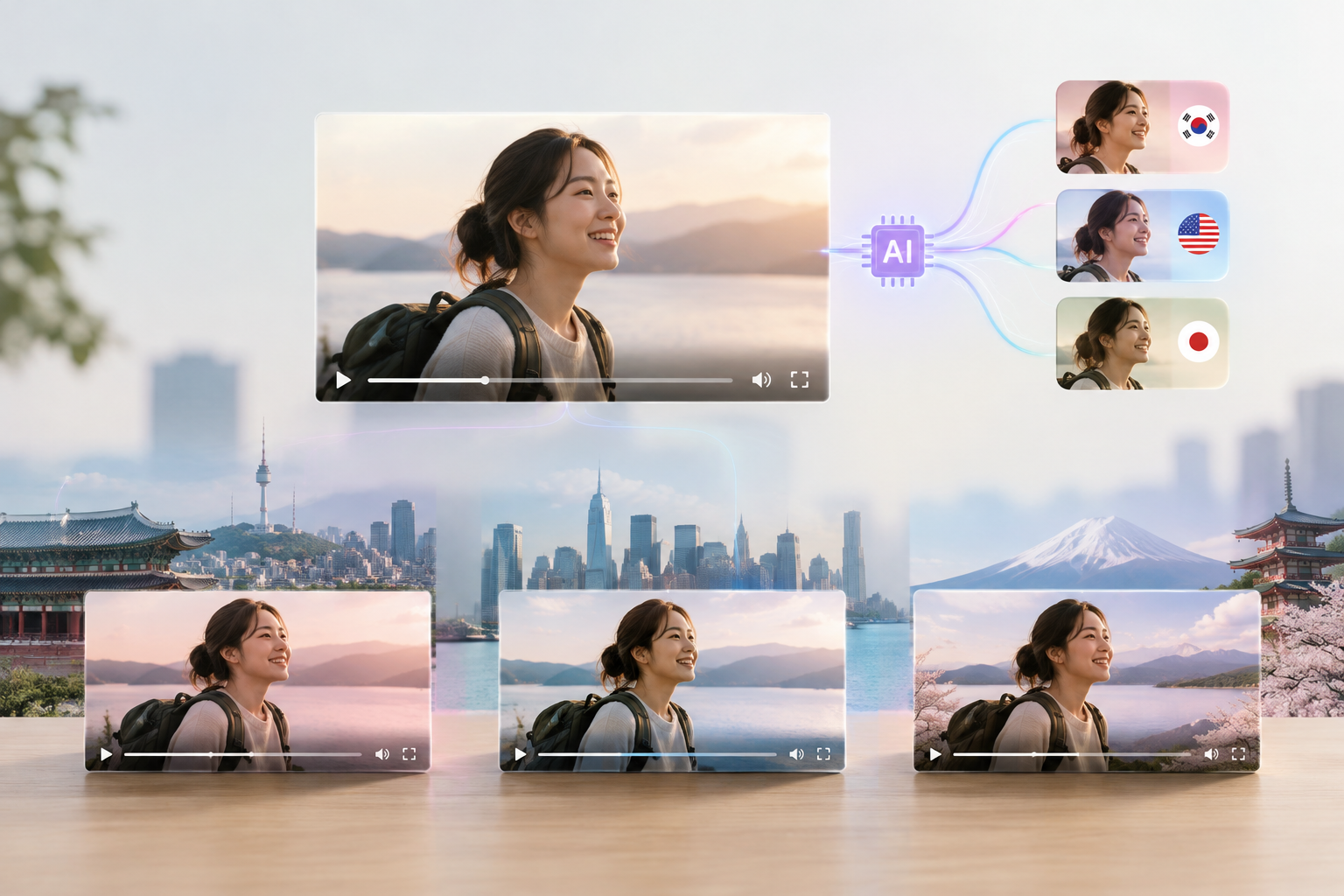
Video ad localization is a production task, not just a translation task. A Korean, English, and Japanese version may share product footage, but each finished ad needs its own review of spoken lines, captions, on-screen text, and purchase information. Start by separating what the camera can show in every version from what needs to change.
Video ad localization: plan the shared footage first
Keep footage that demonstrates the same product action and supports the same verified message. Flag prices, offers, and purchase instructions for review in each market, not just each language. An English-language version, for example, does not automatically have one set of selling terms everywhere it runs.
A simple production brief can have two columns:
- Shared: product actions, shot order, verified facts, brand identifiers.
- Version-specific: opening line, voiceover, captions, on-screen copy, call to action, destination page.
A shot list you can adapt
Here is a fictional zipper-pouch ad, offered as a filming template rather than an example of a real product claim:
| Shot | Film | Decide per version |
|---|---|---|
| Opening | A hand searches a bag for keys. | Write a natural opening line. |
| Use | A hand puts keys and a cable in the pouch and closes it. | Keep text clear of the action. |
| Outcome | A hand takes out the pouch and picks up the keys. | Check that the edit shows what the copy describes. |
| Close | The product beside an information screen. | Verify the call to action and destination page. |
Possible opening-copy drafts are “Where are my keys?”, Korean 「가방 속 열쇠, 어디 있지?」, and Japanese 「鍵、どこに入れたっけ?」. They are illustrative lines, not evidence that one phrasing performs better in a particular market. Ask reviewers familiar with the intended audience to revise them; do not add unverified product benefits. Likewise, a filmed scenario is an illustration, not a customer testimonial. Never present the person on camera as a customer reporting an experience unless that is genuinely what was recorded.
Finish and approve each version
- Lock the verified product message and shared shot order. Write the three scripts and sets of on-screen text separately.
- Decide whether each edit needs voiceover, captions, or text alone. If you dub a visible speaker, inspect the fit between the new audio and their mouth movements.
- Review the exported video, not only the script: can viewers read the text, see the product action, and still understand the shot if it is reframed for a placement?
- Have a market reviewer check phrasing, any price or offer, the call to action, and the page it opens before approval.
The goal is one controlled production with three independently checked ads—not three translated files assumed ready to publish.