5 Nurse Recruitment Video Ad Examples: Japanese Hooks and Scene Plans
Explore five hypothetical ads that open with working conditions, return-to-practice support, or teamwork. Includes a workflow for creating Japanese recruitment ads using staff and facility photos and workplace footage.
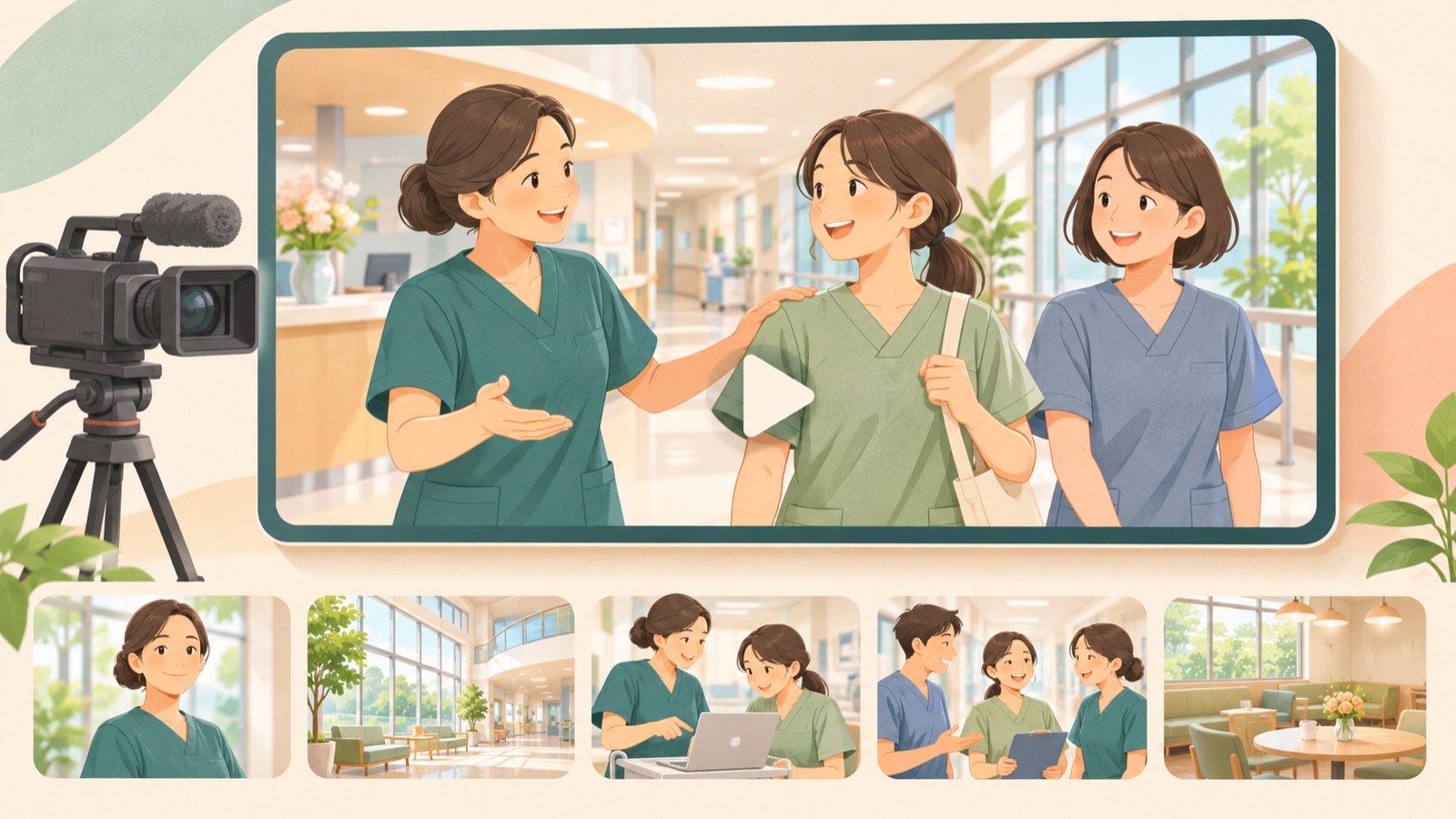
Start a nurse recruitment video ad for Japan with one question applicants are most likely to have. If working conditions are your strength, show the schedule first. If you offer return-to-practice support, lead with the training process. If you want to highlight teamwork, open with an actual handover. Below are five hypothetical examples built around staff and facility photos and workplace footage. Choose a structure that fits your available assets to create a Japanese script and scenes. Replace the support programs and recruitment conditions in these examples with details confirmed to be in place at your organization.
1. Lead with Working Conditions

This is a hypothetical example. The opening screen places the line 「日勤で働きたい方へ」 prominently over a photo of the staff break area. This opening works when you are actually recruiting for day shifts. Follow with the facility exterior, workspaces, and recruitment conditions, then close with 「勤務条件を見る」. Give working hours and recruiting departments separate scenes so they are easy to read, instead of listing them at length on one screen. This structure draws on a nurse recruitment service’s approach to distinguishing messages about working conditions from opening hooks.4
This structure helps applicants assess how the working hours fit their lives. It suits organizations with plenty of facility photos but limited video footage featuring staff. To apply it to your organization, first confirm working hours, employment type, and recruiting departments. In AdForge, choose a reference ad that puts the copy front and center, then enter your facility photos and confirmed conditions. In the generated script and storyboard, give each condition its own scene, then check the Japanese narration and subtitles. If the role includes shift work, adjust the opening line to match.
2. Address Concerns About Returning to Practice

This is a hypothetical example. Open with photos of an empty training room and nursing supplies, with 「ブランクがあっても大丈夫?」 as the first subtitle. Follow with training materials, practice spaces, and actual footage of someone practicing alongside the person responsible for training. Close with 「復職支援の内容を見る」. A published production example of a vertical social media ad for a nurse recruitment service also uses an opening built around a specific concern someone has about returning to practice. The scenes and copy here are a hypothetical concept, rather than a recreation of that ad.1
The aim of this example is to show what nurses will learn after returning to practice, rather than offer general encouragement. It suits organizations that have an established training program and someone responsible for support. In AdForge, select a reference ad that opens with a question, then add training photos and footage you have permission to use, along with the support details. Reflect the training’s intended participants and actual content in the Japanese script, and check that the storyboard scenes match your assets. Do not use training photos alone to promise support through to independent practice; describe only the confirmed process.
3. Show How Colleagues Work Together
This is a hypothetical example. Open with a short workplace clip of someone explaining a task to a colleague, overlaid with 「困ったとき、どう相談する?」. Then show a photo of the handover area, team meeting footage, and a photo of the break area, in that order. Use subtitles to explain the handover and consultation procedures visible on screen, instead of making judgments such as “a great atmosphere.” A hospital recruitment promotional video case study describes a production process using footage of actual employees at work and their voices. However, responses to a promotional video cannot be interpreted as recruitment ad performance.3
Scenes of collaboration help applicants picture what working with colleagues would look like after joining. Choose this approach when you have assets covered by employees’ consent to filming and the necessary usage rights. Add collaboration scenes and your organization’s actual working practices to AdForge, then create a new video based on the reference ad’s shots and pacing. If the script reads like an individual employee’s personal account, rewrite it as an organizational description. Avoid lines in AI narration that sound like direct employee statements, and remove assets showing patient information before uploading.
4. Walk Through a Home-Visit Nursing Workday
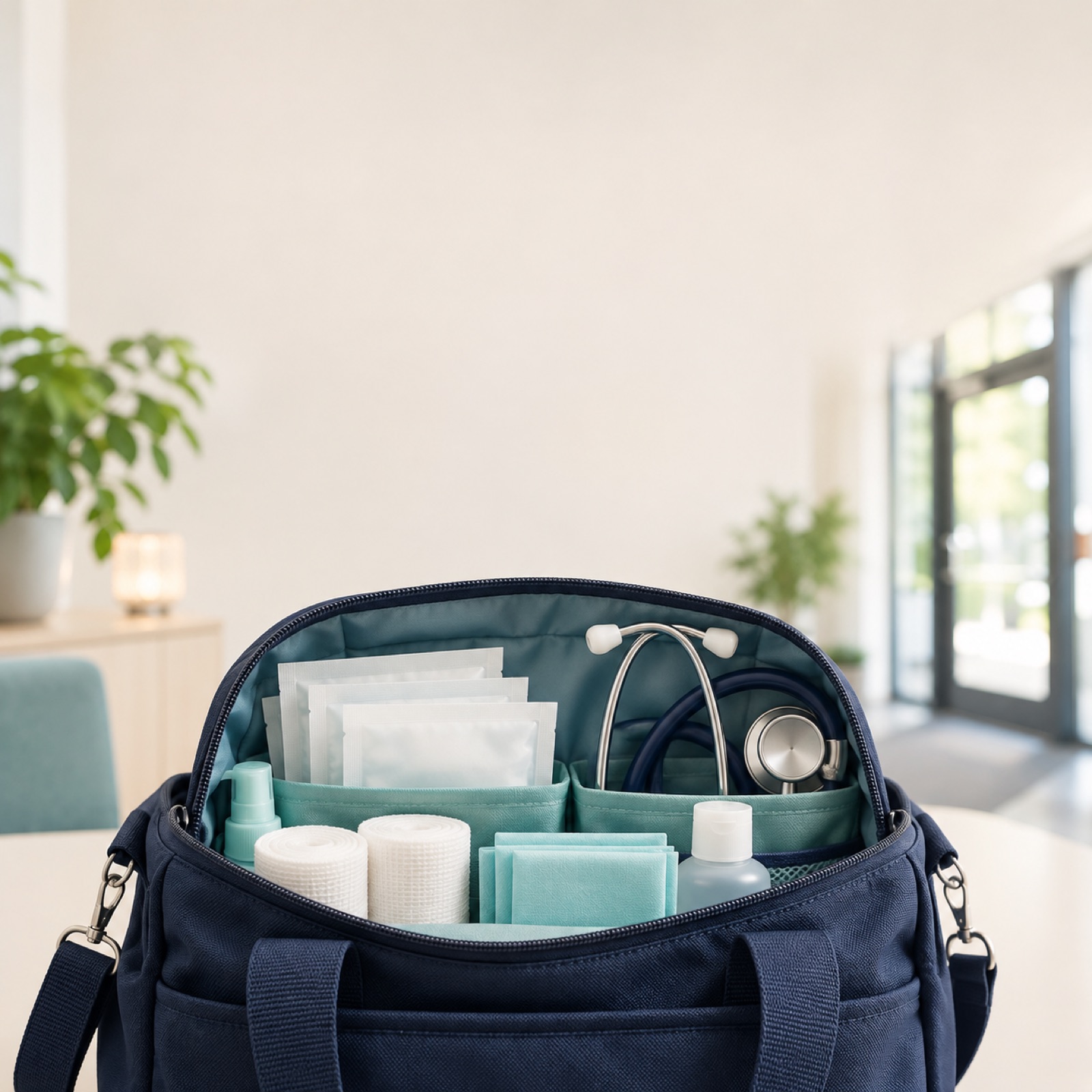
This is a hypothetical example. Start with a close-up of a nursing bag packed and ready for a visit, accompanied by 「訪問看護の一日、何をする?」. Follow with preparation in the office, a photo of the transportation used, footage of hands completing records, and a return to the office. This structure explains the work sequence without showing care recipients’ homes or faces. End with 「仕事内容を見る」. The structure of answering the hook’s question in the body and leading into a closing action draws on TikTok’s official creative principles.2
This structure suits introductions to the workflow for applicants with no home-visit nursing experience. Show the preparation, visits, and recordkeeping confirmed for the actual role, rather than inventing visit counts or travel areas. In AdForge, choose a reference ad with scenes that follow a sequence, then upload assets showing the bag, office, transportation, and recordkeeping. Adjust the script and storyboard sequence to match the actual work, then produce it in Japanese. If the generated result includes medical procedures or equipment use that differ from actual practice, regenerate and review those scenes.
5. Invite Applicants to Tour the Facility
This is a hypothetical example. Place 「応募前に、職場を見てみませんか」 over a photo of a bright facility entrance. Next, show where the tour begins, the workspaces, and a place for questions, then close with 「見学の案内を見る」. This structure suits organizations that actually offer facility tours before application. If tours are not available, change it to an introduction to the role being advertised. The purpose of this example is to give applicants a specific next step for learning about the workplace, rather than push them to apply immediately.
In AdForge, start by finding and saving an ad from the Meta or TikTok ad libraries with an opening and a sequence for introducing spaces that fit your needs. Review the saved ad’s analysis of its hook, shots, subtitles, and voice to choose your reference. Add the organization’s photos and footage for the video, along with the actual tour information, and select Japanese as the language. Edit the intended tour participants and guidance copy in the AI-generated script and storyboard, then produce the video. Check the facility’s appearance, Japanese pronunciation, and subtitles in the result, and regenerate only the scenes that need changes. After downloading the finished video, use your existing ad management tools to set up the ad and review performance.
Key takeaways
Start a nurse recruitment video with one topic applicants want to know about: working conditions, return-to-practice support, collaboration, home visits, or facility tours. Choose a structure you can support with actual assets, create a Japanese video in AdForge, review the recruitment details and scenes, and download it.
FAQ
Can I create a nurse recruitment video ad with only staff photos?
You can build scenes using staff and facility photos and confirmed recruitment conditions. If photos are your main assets, start with a working-conditions or facility-tour structure. Add a reference ad and your assets in AdForge to create the video, then check the photo usage rights and the finished result. Video production requires a paid plan.
How should I choose the Japanese opening line?
Choose it based on your target applicants and what you can actually answer. For nurses hoping to return to practice, connect it to the training process. For applicants who prioritize working hours, connect it to confirmed working conditions. If you use a question as the hook, answer it in the next scene.
Can I create Japanese narration and subtitles as well?
AdForge can create Japanese scripts, AI narration, and subtitles. You can edit the script and storyboard yourself. In the finished video, check the pronunciation of the organization’s name and role-specific terms, the wording of working conditions, and whether the subtitles match what is shown on screen.
Which of the five structures should I test first?
Start with the structure that best matches your confirmed strengths and available assets. If you have actual training footage, start with return-to-practice support. If facility photos make up most of your assets, start with working conditions. Then keep the recruitment conditions and closing the same while changing the opening scene to make differences between openings easier to assess. Review performance in your existing ad management tools.
Make your next ad with AdForge
AdForge (ad-forge.io) is an ad remake app: pick an ad you like and rebuild it as a video or image ad for your own product. Find references in the Meta and TikTok ad libraries, let AdForge write the script, AI narration and captions, then review and download. Every account starts with 12 free image ads.