AI ad creation: Faster production is not proof of better performance
AI ad tools promise more variants in less time. Here is what those claims establish—and what you still need to compare before calling an ad successful.
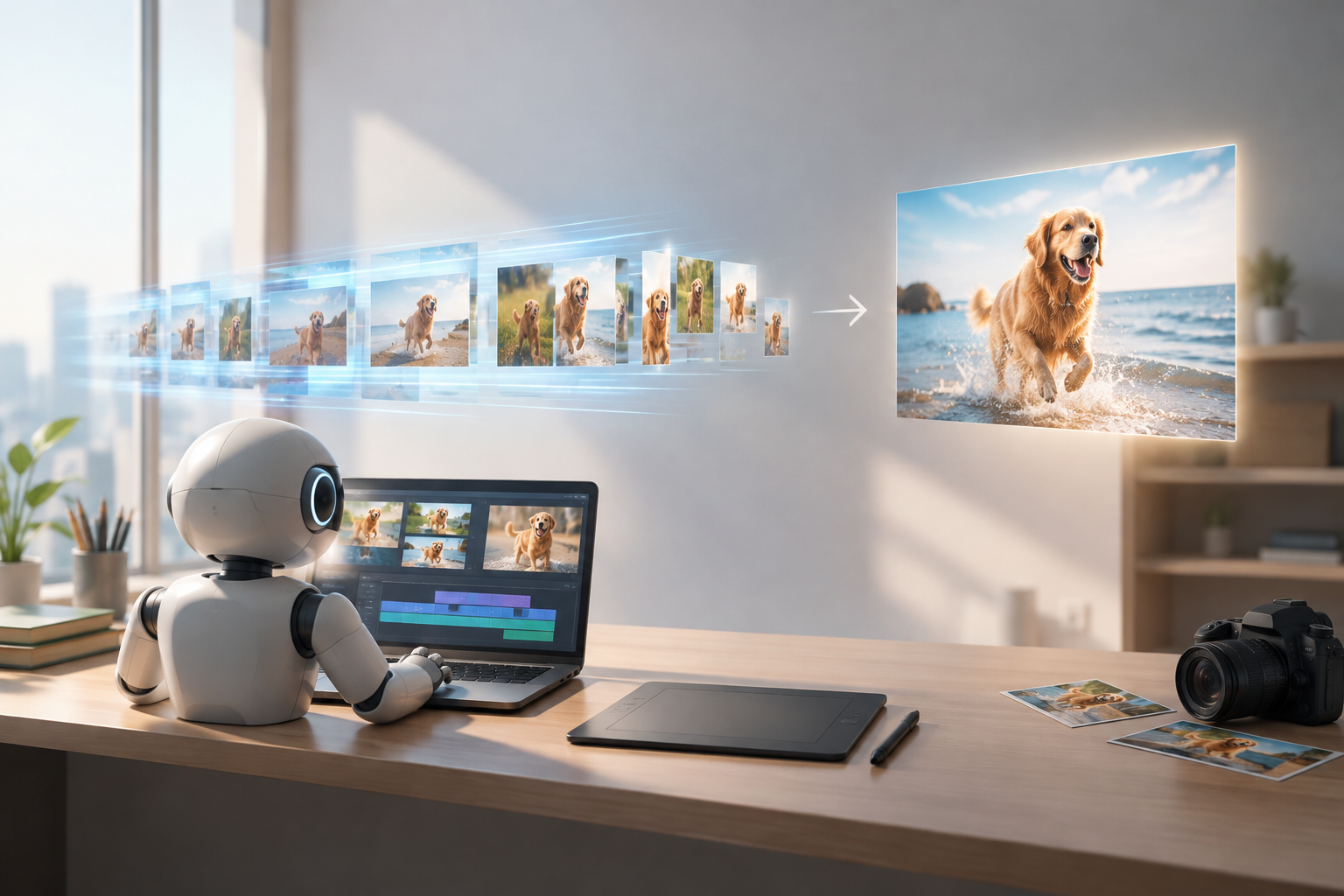
Search for AI ad creation and two promises often appear together: faster production and stronger results. They are not the same claim. Zeely describes generating static, video, and UGC-style variations quickly; Creatify describes a workflow that also launches ads and tracks creative-level metrics. Those are descriptions from the companies selling the tools, not independent evidence that an AI-made ad outperforms an existing one. 4 2
What AI ad creation can show before an ad runs
The supplied product pages give concrete examples of production tasks. Invideo says users can start with a prompt, image, or product link; Zeely describes generating different formats, headlines, and copy. That can help a team prepare alternatives to test. It cannot tell the team which alternative will drive purchases before the campaign is measured. 1 4
Treat impressive figures with the same distinction in mind. Creatify presents claims about production cost and leads; Domer AI makes its own claims about speed and cost savings. These are vendor claims. The supplied material does not establish a like-for-like comparison in which AI production was the only meaningful difference. Nor does a comparison between different ad formats, on its own, isolate the effect of using AI. 2 3
There is also work between a generated draft and a finished ad. AI-K STUDIO’s description of its production service separates the brief and concept from AI production, post-production, and delivery. That is one provider’s workflow, not a universal timetable, but it is a useful reminder to count revisions and finishing work when assessing production effort. 5
A four-part comparison checklist
- Define the outcome: Decide whether the campaign is meant to earn views, clicks, enquiries, or purchases before judging results.
- Name the comparison creative: Specify the existing ad or non-AI version that the AI-assisted creative will be compared with.
- Make delivery comparable where possible: Check audience, placement, budget, and run period. If they differ, avoid attributing the entire result to the creative.
- Keep two records: Track production and revision time separately from campaign results. A shorter production cycle is not, by itself, improved ad performance.
The defensible use of AI ad creation is to prepare creative options for a clear test. A performance claim needs the next step: a stated outcome, a credible comparator, and an account of the conditions under which both ads ran.